Blogs



newsroom
News & Updates
Recent Updates
How AI-Ready Queue Management Helps Enterprises Move Beyond Digital Tickets
Published: July 31, 2026
How AI-Ready Queue Management Helps Enterprises Move Beyond Digital Tickets
- Why digital tickets are no longer enough
- How AI improves queue prediction and service routing
- What operations leaders should evaluate before implementation
- How ATT InfoSoft supports intelligent queue transformation
- Practical next steps for service-heavy organisations
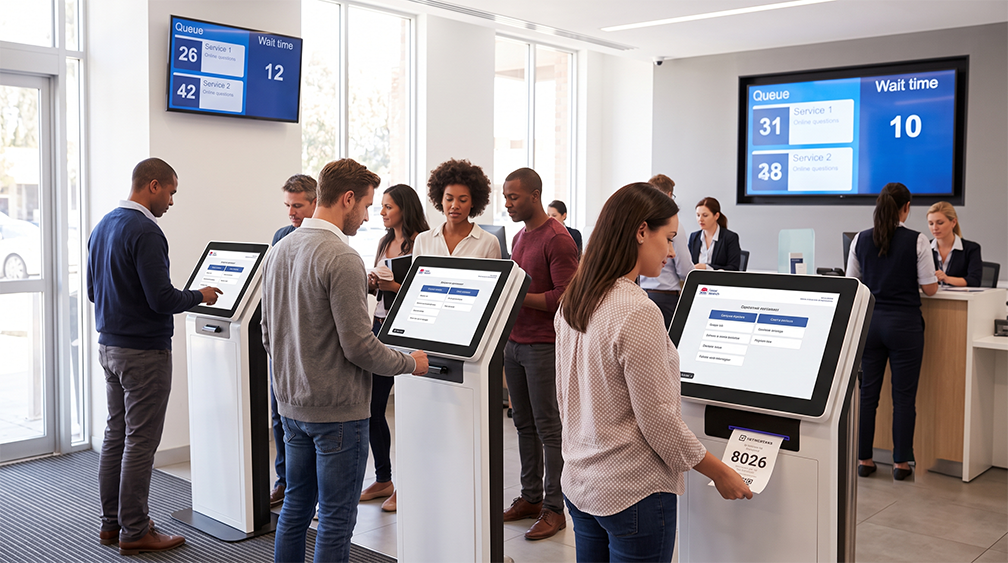
Digital queue tickets were once a major step forward for service centres. They replaced paper-based waiting lines, created a clearer order of service, and gave customers a more structured experience. In 2026, however, many enterprises need more than a digital number on a screen. Hospitals, banks, government service centres, and transport facilities are dealing with fluctuating demand, rising service expectations, and tighter operational budgets. The next stage is AI-ready queue management.
An AI queue management system helps organisations move from reactive queue control to proactive service orchestration. Instead of only showing who is next, the system can analyse real-time traffic, historical patterns, service counters, appointment data, and customer categories. This makes it possible to forecast busy periods, adjust routing rules, and support better staffing decisions before congestion becomes visible at the front line.
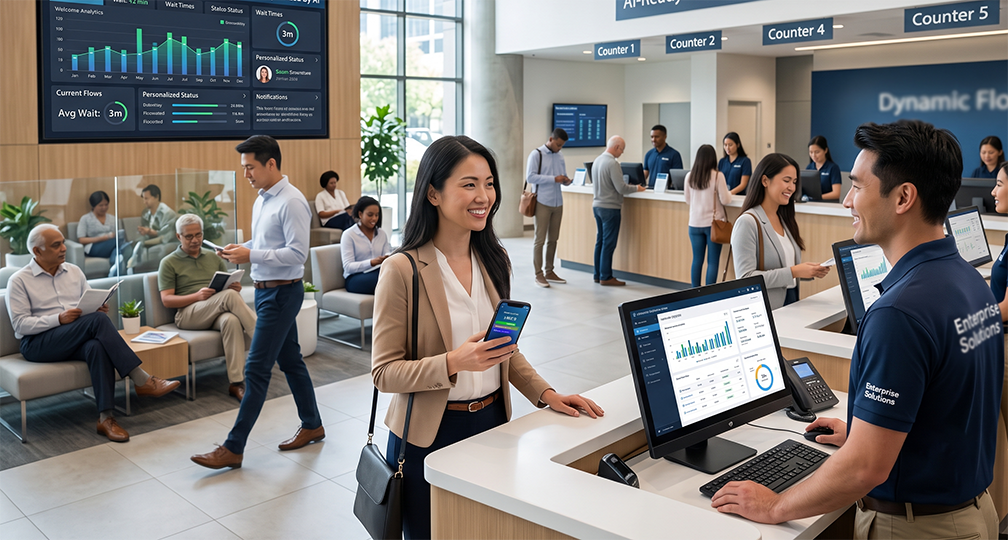
For operations leaders, the value is practical. Average waiting time can be reduced when customers are routed to the right service point earlier. Agent utilisation can improve when workloads are balanced across counters or branches. Customer satisfaction can rise when visitors receive clearer notifications, mobile queue updates, and more predictable service journeys. In high-pressure environments such as hospitals or public service centres, these improvements are not cosmetic. They directly affect throughput, staff stress, and public perception.
The most important shift is that queue management is becoming part of a connected operational ecosystem. A modern platform should integrate with appointment systems, kiosks, digital signage, customer feedback tools, and enterprise dashboards. When these systems work together, leaders can see not only queue length but also why delays occur, which services are overloaded, and where process changes will deliver the best return.
ATT InfoSoft’s Q’SOFT Enterprise Queue Management System (EQMS) is designed for this type of environment. ATT combines queue orchestration, kiosk integration, mobile queue tracking, real-time dashboards, and configurable routing logic to help organisations manage complex customer flows. For clients that need flexibility, ATT can also support SaaS-based deployment, helping teams reduce maintenance burden while still accessing enterprise-grade capabilities.
Another important factor is sector fit. Queue management in a hospital is different from queue management in a bank or government agency. Healthcare teams may need patient flow visibility and appointment adherence. Financial institutions may prioritise privacy, customer segmentation, and service counter efficiency. Public agencies may need scalable systems that can handle unpredictable traffic and strict reporting requirements. ATT’s customisation-first approach is useful here because the system can be configured around the client’s actual workflows rather than forcing every organisation into a generic template.
When evaluating an AI queue management system, decision-makers should ask several questions. Can the platform provide real-time analytics? Can it support both walk-ins and appointments? Does it integrate with kiosks, mobile notifications, and existing IT systems? Can administrators adjust queue rules without heavy technical intervention? Does the vendor provide long-term support, training, and maintenance?
The goal is not to automate service for the sake of automation. The goal is to create a more predictable, transparent, and efficient customer journey. An AI-ready queue management platform gives organisations the evidence they need to make better decisions, while giving visitors a smoother experience from arrival to completion.
For enterprises still relying on basic ticketing, the next competitive advantage will come from intelligence, integration, and measurable service improvement. With ATT InfoSoft’s EQMS, organisations can take a practical step toward smarter customer flow management and a more resilient service operation.
To explore how ATT InfoSoft’s Q’SOFT EQMS can improve customer flow in your organisation, contact infosoft-sales@attsystemsgroup.com for a consultation or demo.
FAQ
What is an AI queue management system?
It is a digital platform that uses data, analytics, and configurable automation to manage customer flow, predict demand, route visitors, and improve service efficiency.
Which industries benefit most from AI queue management?
Hospitals, banks, government service centres, transport hubs, education institutions, and other high-footfall environments benefit strongly.
How does ATT support queue management transformation?
ATT InfoSoft provides Q’SOFT EQMS with queue orchestration, dashboards, kiosk integration, mobile queue tracking, routing logic, and long-term implementation support.
Send us a message
Contact Information
Address:
35 Ubi Crescent, ATT Building, Singapore, 408585
Phone:
Email:
Website:
www.attsystemsgroup.com