Blogs



newsroom
News & Updates
Recent Updates

Categories
How do queue management systems reduce operational costs?
Published: January 21, 2026

How do queue management systems reduce operational costs?
ATT’s Queue management systems reduce operational costs by automating customer flow, minimising manual intervention, and enabling data-driven resource allocation. These systems eliminate the need for dedicated staff to manage physical queues, redirect walk-ins, and manually track service performance, which directly lowers labour expenses and administrative overhead.
Beyond labour savings, queue management technology optimises staff deployment through real-time analytics, reduces reliance on physical materials like printed tickets, and improves service throughput without additional headcount. Organisations across healthcare, government services, banking, and retail realise measurable cost reductions within months of deployment, making these systems a strategic investment in operational efficiency and financial sustainability.
What are the main ways queue management systems cut costs?
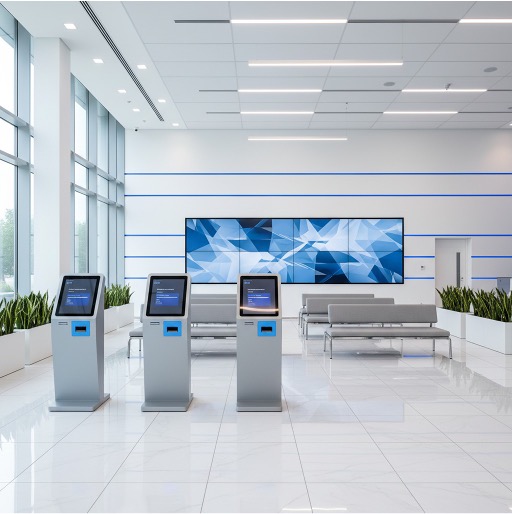
Queue management systems deliver cost savings across four primary operational areas: Labour efficiency, resource optimisation, process automation, and compliance risk reduction. Automation replaces manual tasks such as ticket distribution, queue monitoring, and customer redirection, freeing staff to focus on high-value service delivery rather than crowd control. Self-service kiosks and digital ticketing reduce the need for front-desk personnel during peak periods, allowing organisations to operate leaner teams without compromising service quality.
- Labour cost reduction through staff reallocation from queue management to customer-facing roles that generate value
- Resource optimisation enabled by predictive analytics that forecast demand patterns and eliminate overstaffing
- Material savings from digital ticketing and appointment systems that replace paper-based processes
- Compliance efficiency through standardised workflows that reduce errors, complaints, and regulatory penalties
Real-time data insights allow managers to schedule staff according to actual demand rather than estimates, preventing costly overtime and reducing idle time. This precision in workforce planning is particularly valuable in public sector agencies and healthcare facilities where budget constraints are significant.
How does automation in queue systems improve productivity?
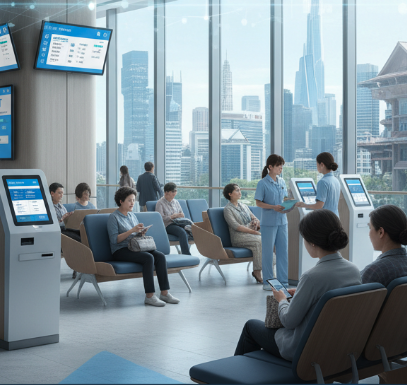
Automation in queue management systems increases productivity by eliminating repetitive manual tasks, accelerating service delivery, and enabling staff to handle more transactions per shift.
Digital queue systems automatically register customers, assign service priorities, notify staff of incoming requests, and track service times without human intervention. This streamlined workflow reduces bottlenecks, minimises customer wait times, and allows service teams to process higher volumes efficiently.
Self-service options such as online appointment booking and check-in kiosks empower customers to manage their own service journey, reducing dependency on staff for basic administrative functions. In banking and government sectors, this shift toward customer self-sufficiency has proven to reduce front-desk workload by up to 40%, allowing personnel to focus on complex enquiries and high-priority cases.
- Faster service cycles due to automated customer routing and priority assignment based on service type
- Reduced administrative errors through digital workflows that standardise data capture and service tracking
- Enhanced staff utilisation as employees shift from queue monitoring to active customer engagement
Solutions such as ATT Group’s Q’SOFT™ Intelligent Queue Management System integrate modular automation capabilities that adapt to organisational workflows, enabling continuous productivity improvements as business needs evolve.
What role does data analytics play in cost reduction?

Data analytics embedded in queue management systems enable organisations to make evidence-based staffing decisions, predict peak periods, and identify inefficiencies that inflate operational costs.
Real-time dashboards provide visibility into service performance metrics including average wait times, service durations, and customer flow patterns. This transparency allows managers to adjust staffing levels dynamically, deploy resources where demand is highest, and prevent unnecessary labour expenses during off-peak hours.
- Predictive forecasting identifies high-demand periods, enabling proactive staff scheduling that avoids last-minute overtime
- Performance benchmarking highlights underperforming service points and staff inefficiencies that increase costs
- Capacity planning tools ensure optimal resource allocation across multiple branches or service locations
In public sector environments, analytics-driven queue management reduces citizen complaints and service disruptions by ensuring consistent service levels, which lowers the cost of handling escalations and regulatory audits. Financial institutions leverage these insights to balance service quality with cost control, achieving higher customer satisfaction without inflating budgets.
How quickly do organisations see return on investment?
Most organisations achieve return on investment from queue management systems within 12 to 18 months, driven by immediate labour savings, improved throughput, and reduced operational waste.
Initial costs include software licensing, hardware such as kiosks and display systems, integration with existing IT infrastructure, and staff training. However, the rapid reduction in manual queue handling, decreased overtime, and enhanced service capacity quickly offset these upfront expenses.
Healthcare providers report cost savings of 20-30% in front-office operations within the first year, while government agencies experience fewer service disruptions and lower support costs. Retail banking clients benefit from higher transaction volumes per employee and reduced reliance on temporary staff during peak periods.
- Queue management systems delivered by ATT Group integrate seamlessly with existing IT ecosystems, reducing implementation time and minimising disruption
- Customisable solutions ensure organisations pay only for features they need, avoiding unnecessary costs
- 24/7 technical support and ISO-certified quality assurance reduce downtime and maintenance expenses
- Long-term benefits extend beyond direct cost savings to include improved customer satisfaction, enhanced staff morale, and scalability that supports future growth without proportional increases in operational expenses.
Key Takeaways
- Queue management systems reduce operational costs by automating manual processes, optimising staff allocation, and eliminating resource waste through data-driven insights.
- Organisations achieve measurable labour savings by reallocating staff from queue monitoring to value-generating customer service roles, while self-service options further reduce dependency on front-desk personnel.
- Real-time analytics enable precise demand forecasting and resource planning, preventing overstaffing, reducing overtime, and ensuring efficient operations across peak and off-peak periods.
- Return on investment typically occurs within 12 to 18 months, with long-term benefits including improved service throughput, enhanced customer satisfaction, and scalable operations that grow without proportional cost increases.
Making the Business Case for Queue Management Investment
Queue management systems represent a strategic investment that delivers immediate cost reductions and long-term operational resilience. By automating routine tasks, providing actionable data insights, and enabling flexible resource allocation, these systems empower organisations to deliver superior service outcomes while controlling expenses. As digital transformation accelerates across public and private sectors, the adoption of intelligent queue management becomes essential for organisations seeking to balance service excellence with fiscal responsibility.
Discover how ATT Group’s Q’SOFT™ Intelligent Queue Management System can reduce your operational costs and enhance service efficiency. Contact ATT Group today to explore customised, scalable solutions tailored to your organisation’s unique needs.
Contact ATT at infosoft-sales@attsystemsgroup.com for details.
Frequently Asked Questions
Q: How much can a queue management system realistically reduce staffing costs in the first year?
A: Healthcare providers report 20-30% savings in front-office operations within the first year, primarily by reallocating staff from queue monitoring to value-generating customer service roles and reducing overtime expenses.
Q: What’s the difference between ATT Group’s Q’SOFT™ system and basic digital ticketing solutions?
A: Q’SOFT™ offers modular automation with predictive analytics, real-time staff allocation, and seamless IT integration, whereas basic ticketing only digitises ticket distribution without optimising resource deployment or providing actionable performance insights.
Q: Do queue management systems actually eliminate the need for front-desk staff or just reduce their workload?
A: They primarily reduce workload rather than eliminate positions, with self-service kiosks and digital ticketing decreasing front-desk dependency by up to 40% while allowing staff to focus on complex enquiries and high-priority cases.
Q: How does predictive analytics in queue systems prevent unnecessary overtime costs?
A: Real-time dashboards identify high-demand periods in advance, enabling proactive staff scheduling based on actual patterns rather than estimates, which eliminates last-minute overtime and reduces idle time during off-peak hours.
Q: What hidden costs do organisations miss when calculating ROI for queue management systems?
A: Beyond direct labour savings, organisations often overlook reductions in compliance penalties from standardised workflows, decreased material costs from eliminating paper tickets, and lower support costs from fewer service disruptions and customer complaints.
Q: Can small organisations with limited budgets still afford queue management technology?
A: Yes, customisable solutions allow organisations to pay only for needed features, and most achieve ROI within 12-18 months through immediate labour savings and improved throughput that offset upfront licensing and hardware costs.
Contact ATT at infosoft-sales@attsystemsgroup.com for details.
Send us a message
Contact Information
Address:
35 Ubi Crescent, ATT Building, Singapore, 408585
Phone:
Email:
Website:
www.attsystemsgroup.com