Blogs



newsroom
News & Updates
Recent Updates

Categories
How Video Analytics Enhances Visitor Management Systems
Published: January 6, 2026
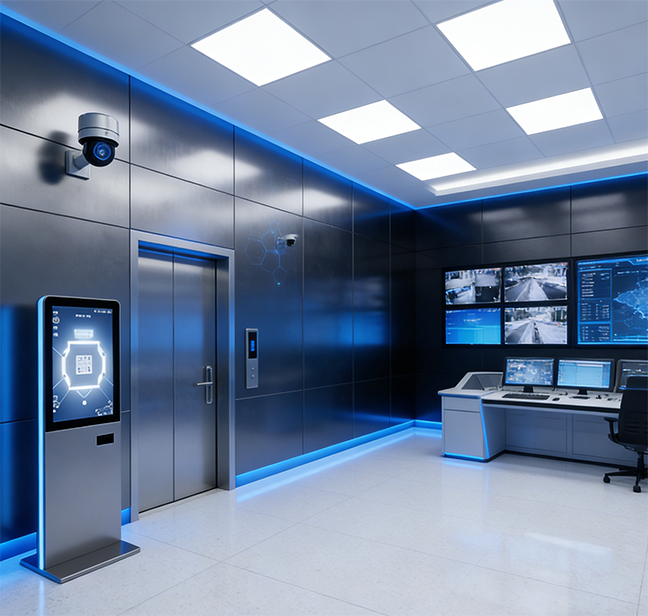
Video analytics is transforming modern Visitor Management Systems (VMS) from simple access control tools into intelligent security platforms that deliver real-time insights and proactive threat detection. As organisations across healthcare, government, finance, and corporate sectors strengthen their security postures in 2025, integrating AI-powered video analytics with VMS has become essential for protecting people, assets, and sensitive data. ATT™’s Visitor Management System combines automated visitor tracking with advanced video analytics to provide comprehensive security intelligence, compliance documentation, and operational efficiency. This article explores how video analytics elevates VMS capabilities from facial recognition and behaviour monitoring to post-incident forensics and why this integration is critical for organisations committed to creating secure, compliant, and future-ready environments in an era of heightened security awareness.
Real-Time Threat Detection and Proactive Security Monitoring
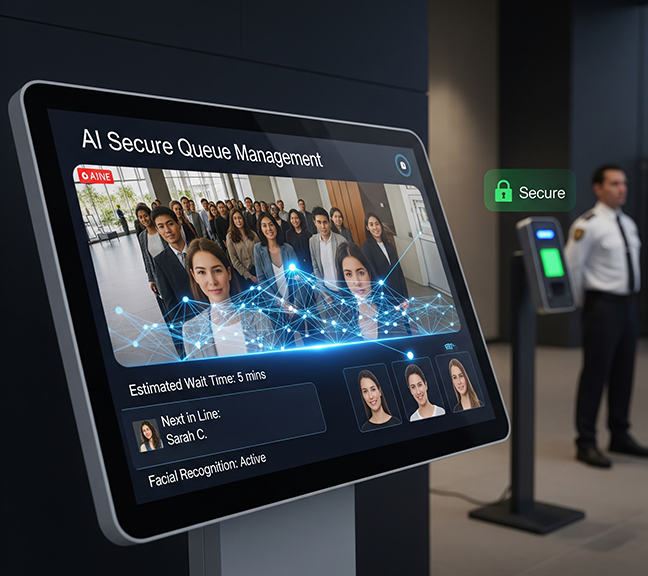
Modern security demands move beyond reactive measures to proactive threat identification. Video analytics integrated with VMS enables organisations to detect suspicious behaviours, unauthorised access attempts, and security anomalies as they occur, rather than discovering them after incidents escalate. AI-powered algorithms continuously analyse video feeds, identifying patterns such as loitering, tailgating, or restricted area breaches, and immediately alerting security personnel. This real-time monitoring capability is particularly valuable in high-security environments like hospitals, government facilities, and financial institutions where every second counts in preventing potential threats. By combining visitor registration data with live video intelligence, ATT™’s VMS creates a comprehensive security layer that anticipates risks before they materialise into serious incidents.
The shift from passive surveillance to active threat detection represents a fundamental evolution in how organisations approach facility security. Traditional CCTV systems require constant human monitoring, a task that becomes increasingly difficult as facilities expand and camera networks grow. Video analytics addresses this challenge by serving as an always-on intelligent observer, processing multiple video streams simultaneously and identifying anomalies that might escape human attention during extended monitoring shifts. Security teams can focus their expertise on responding to genuine threats rather than watching screens for hours, dramatically improving both security effectiveness and staff productivity. This proactive approach not only prevents incidents but also creates a visible security presence that deters potential wrongdoers from attempting breaches in the first place.
Automated Suspicious Behaviour Detection
Video analytics engines within ATT™’s VMS employ machine learning models trained to recognise behaviours that deviate from normal patterns. When the system detects unusual activities such as individuals lingering near sensitive areas, attempting unauthorised door access, or exhibiting agitated movements, it automatically flags these events and sends alerts to security teams. This intelligent monitoring reduces the burden on human operators who cannot maintain constant vigilance across multiple camera feeds. Organisations implementing this technology report up to 40% faster incident response times, enabling security staff to intervene before situations escalate into serious security breaches.
The sophistication of these detection algorithms continues to advance throughout 2025, with systems now capable of distinguishing between genuinely suspicious behaviour and innocent actions that might superficially appear concerning. For instance, the system can differentiate between a visitor legitimately waiting for an appointment and someone conducting surveillance of entry points. This intelligence minimises false alarms that can lead to alert fatigue among security personnel, ensuring that when notifications are issued, they warrant immediate attention. The result is a security operation that remains responsive and effective without overwhelming staff with constant low-priority alerts.
Perimeter and Restricted Zone Enforcement
Video analytics creates virtual boundaries and restricted zones within facility maps, triggering immediate alerts when visitors enter unauthorised areas. This geofencing capability integrates seamlessly with visitor credentials stored in the VMS database, cross-referencing visitor permissions against their physical location in real time. Security teams receive instant notifications when someone without proper clearance approaches or enters restricted zones such as server rooms, executive floors, or research laboratories. This layered security approach ensures that physical access controls are reinforced by intelligent video surveillance, creating multiple checkpoints that protect critical assets and confidential information from both external threats and insider risks.
The virtual boundary system proves especially valuable in complex facilities where physical barriers are impractical or aesthetically undesirable. Healthcare facilities, for example, need to balance security with the open, welcoming environments that reduce patient anxiety. Video analytics allows these organisations to maintain visual openness while enforcing strict access controls electronically. When combined with ATT™’s comprehensive visitor tracking, the system creates complete documentation of who accessed sensitive areas and when, supporting both security investigations and compliance audits with detailed, time-stamped evidence that demonstrates adherence to access control protocols.
Facial Recognition Integration for Seamless Identity Verification
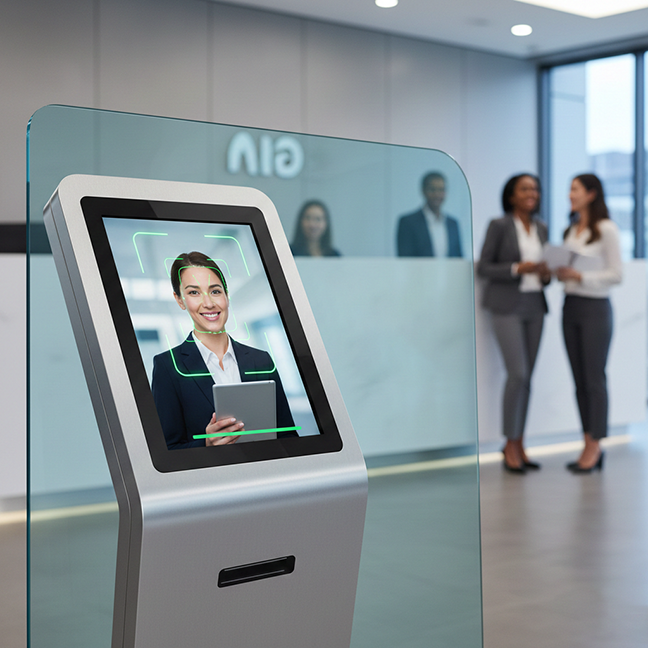
Facial recognition technology has matured into a reliable, privacy-conscious method for verifying visitor identities at entry points. When integrated with VMS, facial recognition eliminates manual check-ins, reduces queues, and strengthens security by ensuring that the person entering matches their pre-registered credentials. ATT™’s VMS leverages facial recognition to create touchless, frictionless entry experiences while maintaining rigorous identity verification standards. This is particularly beneficial in environments with high visitor volumes or heightened security requirements, where manual verification would create bottlenecks and increase the risk of human error. The system can also flag individuals on watchlists or those banned from premises, providing instant security alerts that enable staff to take appropriate action before potential threats enter facilities.
The accuracy of facial recognition systems has improved dramatically, with contemporary solutions achieving verification rates exceeding 99% even in challenging conditions such as varying lighting or visitors wearing glasses. This reliability makes facial recognition a practical primary verification method rather than merely a supplementary check. Implementation within ATT™’s VMS is designed with privacy considerations at the forefront, ensuring that biometric data is encrypted, stored securely, and used exclusively for authorised security purposes. Clear consent mechanisms and transparent usage policies help organisations maintain public trust while deploying this powerful verification technology across their facilities.
Contactless Entry and Enhanced Hygiene
Facial recognition eliminates the need for visitors to touch kiosks, sign-in sheets, or hand over identification documents, significantly reducing pathogen transmission risks in healthcare facilities, schools, and public service centres. Visitors simply approach designated entry points where cameras capture and verify their identity within seconds, cross-referencing their faces against pre-registered profiles in the VMS database. This contactless approach became especially important following global health concerns and continues to be valued for its convenience, speed, and hygiene benefits. Organisations adopting facial recognition report 50% faster check-in times and markedly improved visitor satisfaction scores.
Beyond hygiene advantages, contactless entry creates more dignified experiences for visitors who no longer need to queue at reception desks or fumble with identification documents. This is particularly appreciated in healthcare settings where patients may have mobility limitations or be experiencing medical distress. The seamless entry process reduces anxiety and creates positive first impressions that set the tone for the entire visit. For organisations managing hundreds of daily visitors, the efficiency gains translate directly into reduced staffing requirements at reception points, allowing personnel to be redeployed to higher-value service roles.
Watchlist Alerts and Risk Prevention
Video analytics with facial recognition can compare incoming visitors against security watchlists in real time, immediately alerting security teams if a flagged individual attempts entry. These watchlists may include banned former employees, persons of interest, or individuals subject to restraining orders. The instant alert capability gives security personnel critical seconds to respond appropriately, whether by denying entry, requesting additional verification, or initiating protocol responses. This feature is invaluable for educational institutions, healthcare facilities, and corporate campuses where protecting occupants from known threats is paramount to maintaining safe, secure environments.
The watchlist functionality operates discreetly, ensuring that security concerns are addressed without creating public disturbances that might alarm other visitors. When a match is detected, security staff receive private notifications on mobile devices or workstations, allowing them to approach situations tactfully and professionally. The system maintains detailed logs of all watchlist alerts, including photographs, time stamps, and response actions taken, creating comprehensive documentation that supports legal proceedings or workplace safety investigations should they become necessary.
Multi-Site Identity Consistency
For organisations operating multiple locations, facial recognition integrated with centralised VMS databases ensures consistent identity verification across all sites. A visitor registered at one facility can be seamlessly recognised at another, eliminating redundant registrations and creating unified security records. This capability streamlines operations for large enterprises, government agencies, and healthcare networks while maintaining strict access control and audit trails. Centralised facial recognition data also supports compliance requirements by providing complete, time-stamped records of visitor movements across entire organisational footprints.
Multi-site consistency proves particularly valuable for organisations with mobile workforces or frequent inter-facility visitor movements. Healthcare networks, for example, can track patient movements between clinics, hospitals, and specialist centres, ensuring continuity of security protocols regardless of location. Government agencies managing public services across multiple offices can provide citizens with consistent, efficient experiences whilst maintaining centralised security oversight. This unified approach reduces administrative overhead, prevents security gaps between facilities, and provides management with comprehensive visibility across entire operational estates.
Comprehensive Post-Incident Forensics and Evidence Retrieval
When security incidents occur, rapid access to accurate evidence is essential for investigations, insurance claims, and legal proceedings. Video analytics transforms hours of footage into searchable, actionable intelligence, enabling security teams to quickly locate relevant clips based on specific criteria such as visitor identity, time stamps, locations, or behaviours. ATT™’s VMS archives visitor records alongside synchronised video footage, creating comprehensive digital evidence packages that document who was present, where they went, and what occurred during incidents. This forensic capability is critical for healthcare facilities investigating patient safety events, corporate offices responding to theft or vandalism, and government agencies conducting security audits. The ability to retrieve precise evidence within minutes rather than days significantly accelerates investigation timelines and improves resolution outcomes.
The investigative power of intelligent video search cannot be overstated in environments where incidents may not be discovered immediately. Theft, vandalism, or safety violations might only come to light days or weeks after they occur, by which time traditional manual review of footage becomes prohibitively time-consuming. Video analytics enables investigators to quickly narrow searches to relevant time periods and locations, then apply additional filters such as specific individuals or unusual movements to pinpoint exact incident moments. This capability transforms security teams from reactive responders into proactive investigators who can uncover patterns, identify repeat offenders, and implement preventative measures that address root causes rather than merely responding to individual incidents.
Intelligent Video Search and Retrieval
Traditional security footage review requires operators to manually scan hours of recordings, a time-consuming and error-prone process. Video analytics enables intelligent search functions where investigators can query footage using parameters like visitor names, badge numbers, specific time windows, or even clothing colours and movement patterns. The system rapidly retrieves relevant clips, eliminating tedious manual review. Organisations report reducing investigation times from several days to mere hours, enabling faster incident resolution, more accurate reporting, and better allocation of security resources to proactive monitoring rather than retrospective analysis.
The search sophistication extends to complex queries that would be impossible with manual review. Investigators can search for all instances when a particular visitor accessed specific areas, trace the complete journey of an individual through a facility, or identify everyone present in a location during a defined time period. These capabilities prove invaluable when investigating incidents with multiple participants or when establishing timelines for events involving various locations across facilities. The search results include not only video clips but also associated visitor registration data, creating complete contextual packages that support thorough, accurate investigations.
Synchronised Visitor Records and Video Evidence
ATT™’s VMS automatically links visitor registration data with corresponding video footage, creating unified evidence packages that document entire visitor journeys from entry to exit. When incidents occur, investigators can instantly access both the visitor’s registration details and all associated video clips showing their movements throughout the facility. This synchronisation is invaluable for compliance audits, legal proceedings, and insurance claims where documented proof of events, timelines, and personnel actions is required. The system maintains these records for configurable retention periods, ensuring organisations meet regulatory requirements while protecting themselves against liability claims.
The evidential value of synchronised records extends beyond security incidents to operational quality assurance and service improvement initiatives. Healthcare facilities can review patient journeys to identify service bottlenecks or areas where wayfinding could be improved. Corporate facilities can analyse VIP visitor experiences to ensure appropriate service levels were maintained throughout visits. Government agencies can demonstrate transparency and accountability by providing complete documentation of citizen interactions when complaints or inquiries arise. This multi-purpose utility ensures that video analytics investments deliver value across security, operations, and compliance functions simultaneously.
Operational Intelligence and Resource Optimisation Through Analytics

Beyond security applications, video analytics provides valuable operational insights that help organisations optimise space utilisation, staffing levels, and visitor services. By analysing visitor flow patterns, peak traffic times, and common pathways through facilities, management teams can make data-driven decisions about reception staffing, waiting area configurations, and service capacity planning. ATT™’s VMS generates detailed analytics dashboards that visualise visitor trends, dwell times in different zones, and bottlenecks in check-in processes. These insights are particularly valuable for healthcare facilities managing patient flow, government agencies optimising citizen service delivery, and corporate offices planning facility layouts. The same technology that strengthens security simultaneously delivers operational efficiency gains, creating measurable returns on investment beyond traditional security metrics.
The operational intelligence dimension of video analytics represents a significant evolution in how organisations perceive VMS technology. Rather than viewing visitor management purely as a security expense, forward-thinking organisations recognise it as a strategic tool that delivers insights across multiple business functions. Facilities management teams use traffic pattern data to optimise cleaning schedules and maintenance windows. Human resources departments apply visitor volume trends to refine reception staffing rosters. Marketing teams analyse visitor demographics and behaviours to improve customer engagement strategies. This cross-functional value transforms VMS from a departmental tool into an enterprise asset that supports organisational excellence across diverse operational areas.
Visitor Flow Analysis and Space Planning
Video analytics tracks visitor movement patterns throughout facilities, identifying high-traffic areas, underutilised spaces, and congestion points. Facility managers can use these insights to reconfigure layouts, adjust signage, or relocate services to improve visitor experiences and operational flow. For example, healthcare facilities can identify bottlenecks in waiting areas and adjust appointment scheduling or add service counters accordingly. Retail banks can optimise teller placement based on observed traffic patterns. This data-driven approach to space planning ensures facilities are configured to meet actual usage patterns rather than assumptions, resulting in improved service delivery and better resource allocation.
Space planning insights prove especially valuable during facility renovations or expansions, where investment decisions benefit from empirical evidence about how spaces are actually used. Video analytics can reveal that certain corridors experience congestion at specific times, suggesting the need for widening or alternative routing. Conversely, expensive premium spaces might be consistently underutilised, indicating opportunities for repurposing or revenue generation through alternative uses. These insights prevent costly planning mistakes based on intuition or outdated assumptions, ensuring that facility investments deliver maximum operational value and visitor satisfaction.
Peak Period Identification and Staffing Optimisation
By analysing historical visitor data and video analytics, organisations can accurately predict peak traffic periods and adjust staffing levels accordingly. This prevents understaffing during busy times that leads to long wait times and poor visitor experiences, while also avoiding overstaffing during quiet periods that wastes resources. The predictive capability is especially valuable for government service centres, healthcare clinics, and educational institutions where service quality directly impacts public perception. Organisations implementing analytics-driven staffing report up to 25% improvements in staff utilisation efficiency while simultaneously reducing visitor wait times and improving satisfaction scores.
Staffing optimisation extends beyond simple volume matching to nuanced understanding of service complexity variations throughout the day. Video analytics combined with transaction data reveals that certain periods may experience not just higher visitor volumes but also more complex, time-intensive service requests that require different staffing profiles. Healthcare facilities might discover that morning appointments involve more new patients requiring extensive registration, whilst afternoon slots predominantly serve established patients needing brief check-ins. These insights enable sophisticated roster planning that matches not just staff numbers but also skill mixes and experience levels to anticipated demand patterns, maximising both efficiency and service quality.
Queue Management and Service Quality Enhancement
Video analytics monitors visitor queues at reception desks and service counters, automatically alerting management when wait times exceed acceptable thresholds. This real-time visibility enables supervisors to deploy additional staff or open extra service points before visitor frustration builds. The system can also measure service transaction times, identifying staff training opportunities or process inefficiencies. When integrated with queue management systems like Q’SOFT® EQMS, video analytics provides complete visibility into the visitor journey, enabling organisations to continuously refine service delivery and maintain consistently high satisfaction levels across all touchpoints.
The integration between video analytics and queue management creates powerful synergies that elevate entire service ecosystems. Visual queue monitoring validates that digital queue systems are functioning as intended, identifying discrepancies between virtual queue positions and physical waiting arrangements. This dual verification ensures visitors receive accurate wait time estimates and appropriate service sequencing. The combined data streams also reveal subtle service quality issues that might not be apparent from either system alone, such as visitors abandoning queues due to excessive waits or service counters operating inefficiently despite adequate staffing levels. These insights drive continuous improvement initiatives that systematically enhance visitor experiences whilst optimising operational costs.
Regulatory Compliance and Audit-Ready Documentation
Organisations in highly regulated sectors face stringent requirements for visitor tracking, access control documentation, and incident reporting. Video analytics integrated with VMS creates comprehensive, tamper-proof audit trails that demonstrate compliance with security protocols, data privacy regulations, and industry-specific standards. ATT™
Contact ATT at infosoft-sales@attsystemsgroup.com for details.
Frequently Asked Questions
Q: How does video analytics actually prevent security threats before they happen in visitor management?
A: Video analytics uses AI algorithms to continuously monitor for suspicious behaviours like loitering, tailgating, or restricted area breaches, sending real-time alerts to security teams so they can intervene before situations escalate. This proactive approach enables up to 40% faster incident response times compared to traditional reactive surveillance methods.
Q: Is facial recognition in visitor management systems accurate enough to rely on as a primary security measure?
A: Modern facial recognition systems achieve verification rates exceeding 99% even in challenging conditions, making them reliable for primary identity verification rather than just supplementary checks. ATT™’s Visitor Management System implements facial recognition with privacy-conscious design, encrypting biometric data and using it exclusively for authorised security purposes.
Q: What’s the main advantage of integrating video analytics with visitor management over traditional CCTV?
A: Unlike traditional CCTV that requires constant human monitoring, video analytics serves as an always-on intelligent observer that processes multiple video streams simultaneously and automatically identifies anomalies. This allows security teams to focus on responding to genuine threats rather than watching screens for hours, dramatically improving both security effectiveness and staff productivity.
Q: How quickly can security teams find relevant footage when investigating incidents with video analytics?
A: Video analytics enables intelligent search using parameters like visitor names, time windows, locations, or behaviours, reducing investigation times from several days to mere hours. The system synchronises visitor registration data with corresponding video footage, creating unified evidence packages that document entire visitor journeys from entry to exit.
Q: Can video analytics in visitor management systems actually help reduce operational costs beyond security?
A: Yes, video analytics provides operational insights like visitor flow patterns and peak traffic times that help organisations optimise staffing levels and space utilisation, with some organisations reporting up to 25% improvements in staff utilisation efficiency. The same technology that strengthens security simultaneously delivers operational efficiency gains across facilities management, service delivery, and resource planning.
Q: Does ATT™’s Visitor Management System support compliance requirements for regulated industries?
A: ATT™’s VMS creates comprehensive, tamper-proof audit trails that combine visitor records with synchronised video evidence, demonstrating compliance with security protocols, data privacy regulations, and industry-specific standards. This audit-ready documentation is particularly valuable for healthcare, government, and financial institutions facing stringent regulatory requirements.
Q: How does video analytics handle privacy concerns when monitoring visitors throughout facilities?
A: Modern video analytics systems are designed with privacy at the forefront, encrypting biometric data, storing it securely, and using it exclusively for authorised security purposes with clear consent mechanisms. Systems like ATT™’s VMS ensure transparent usage policies that help organisations maintain public trust while deploying powerful verification technology.
Contact ATT at infosoft-sales@attsystemsgroup.com for details.
Send us a message
Contact Information
Address:
35 Ubi Crescent, ATT Building, Singapore, 408585
Phone:
Email:
Website:
www.attsystemsgroup.com