Blogs



newsroom
News & Updates
Recent Updates
Categories
How do real-time analytics improve service delivery in healthcare queue management?
Published: February 20, 2026
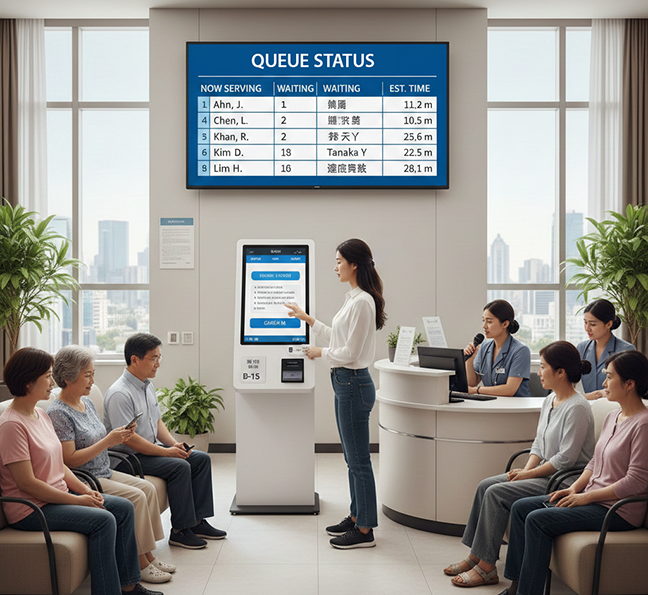
How do real-time analytics improve service delivery in healthcare queue management?
Real-time analytics improve service delivery in healthcare queue management by providing immediate visibility into patient flow, wait times, and resource allocation, enabling instant data-driven decisions that reduce bottlenecks and enhance operational efficiency. Unlike traditional methods that rely on delayed or manual data collection, real-time analytics continuously monitor queue status and patient arrivals as they happen, allowing healthcare providers to respond proactively rather than reactively.
This dynamic approach transforms queue management from a static process into an intelligent, adaptive system that identifies congestion points, prioritises urgent cases, and optimises staff deployment in real time. By leveraging these insights, healthcare facilities can open additional service counters when needed, redirect patients to less crowded areas, and provide accurate wait time information, significantly improving patient satisfaction whilst maximising operational productivity and care quality.
What are real-time analytics in healthcare queue management?
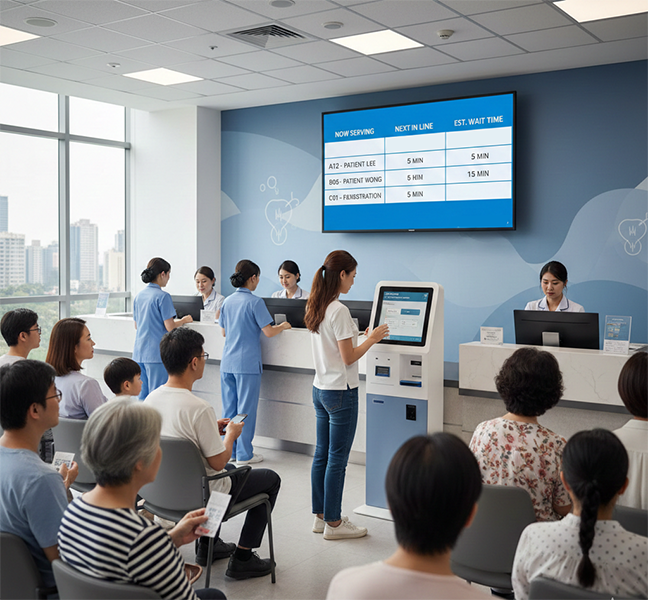
Real-time analytics in healthcare queue management are data processing systems that capture, analyse, and act upon patient flow information as it occurs, delivering instant insights into queue status, service performance, and resource utilisation. These analytics systems integrate with queue management platforms to monitor patient arrivals, service times, staff availability, and waiting patterns continuously throughout the day.
The technology works by collecting data from multiple touchpoints including patient registration kiosks, appointment systems, service counters, and mobile applications. This data is processed immediately using algorithms that identify trends, detect anomalies, and generate actionable recommendations for healthcare staff and administrators.
- Continuous monitoring of patient arrivals, queue lengths, and service counter status across all departments
- Instant calculation of wait times, service durations, and predicted queue progression for accurate patient communication
- Automatic detection of bottlenecks, understaffed areas, and operational inefficiencies as they develop
- Integration with hospital information systems to correlate queue data with appointment schedules and clinical priorities
Advanced queue management systems like ATT Group’s Q’SOFT™ Intelligent Queue Management System leverage real-time analytics to provide healthcare facilities with comprehensive operational visibility, enabling immediate response to changing patient demand and service conditions.
How do real-time analytics reduce patient wait times?
Real-time analytics reduce patient wait times by identifying congestion points instantly and enabling immediate corrective actions such as opening additional service counters, redistributing staff, or redirecting patients to alternative service points. The system continuously calculates current wait times and predicts future queue progression based on patient arrival rates and service patterns.
When analytics detect that wait times exceed acceptable thresholds in specific departments, automated alerts notify management to deploy additional resources. This proactive intervention prevents queue buildup before it becomes problematic, maintaining consistent service levels throughout peak and off-peak periods.
- Dynamic staff allocation based on real-time demand patterns ensures optimal resource distribution across departments
- Intelligent patient routing directs individuals to the least congested service points with equivalent capabilities
- Predictive queue forecasting anticipates demand surges, enabling preemptive resource preparation
- Automated notifications inform patients of accurate wait times and service readiness, reducing perceived waiting stress
Healthcare facilities implementing real-time analytics typically experience measurable reductions in average wait times because the system eliminates the lag between problem identification and corrective action that characterises manual queue management approaches.
What operational benefits do healthcare providers gain from real-time analytics?
Healthcare providers gain significant operational benefits from real-time analytics including improved staff productivity, optimised resource allocation, enhanced service consistency, and data-driven decision-making capabilities that improve overall facility performance. These systems provide managers with comprehensive operational dashboards that display live performance metrics across all service points simultaneously.
Real-time visibility enables healthcare administrators to identify underperforming areas, understand service patterns, and implement targeted improvements based on objective data rather than subjective observations. This analytical approach supports continuous operational refinement and evidence-based resource planning.
- Staff productivity increases as employees receive clear prioritisation guidance and workload distribution based on actual demand
- Resource planning becomes more accurate when supported by historical patterns and predictive analytics that forecast peak periods
- Service consistency improves across shifts and departments through standardised response protocols triggered by analytics
- Operational costs decrease as facilities eliminate unnecessary staffing whilst maintaining service quality standards
- Compliance reporting becomes automated with comprehensive audit trails and performance documentation
ATT Group’s enterprise queue management solutions integrate real-time analytics with modular, scalable architectures that adapt to facility-specific requirements, supporting both on-premise and cloud-based deployment models to suit different operational environments and IT infrastructure preferences.
How do real-time analytics enhance patient experience and satisfaction?
Real-time analytics enhance patient experience and satisfaction by providing accurate wait time information, reducing uncertainty, enabling proactive communication, and ensuring consistent service delivery that meets patient expectations. Patients receive transparent updates about their queue position and estimated service times through digital displays, mobile notifications, and SMS updates powered by real-time data.
This transparency reduces anxiety associated with unknown waiting periods and empowers patients to make informed decisions about their time whilst waiting. The system also enables personalised communication that acknowledges individual circumstances and provides relevant information about service readiness.
- Accurate wait time communication sets realistic expectations and reduces perceived waiting stress
- Mobile queue management allows patients to wait remotely and return when service is imminent, improving comfort and convenience
- Priority queue management ensures urgent cases receive appropriate attention without compromising overall service flow
- Consistent service delivery across visits builds trust and reinforces positive healthcare experiences
Healthcare facilities that implement real-time analytics consistently report improved patient satisfaction scores because the technology directly addresses common pain points related to waiting, communication, and service predictability.
Key Takeaways
- Real-time analytics transform healthcare queue management from reactive to proactive by providing instant visibility into patient flow, enabling immediate corrective actions that reduce wait times and improve operational efficiency.
- Healthcare providers gain measurable operational benefits including optimised staff allocation, improved resource planning, enhanced service consistency, and data-driven decision-making capabilities that increase productivity whilst reducing costs.
- Patient experience improves significantly through accurate wait time communication, reduced uncertainty, personalised updates, and consistent service delivery that meets expectations and builds trust in healthcare facilities.
Transform Healthcare Service Delivery with Intelligent Queue Management
Real-time analytics represent a fundamental shift in how healthcare facilities manage patient flow and service delivery, moving from reactive problem-solving to proactive operational excellence. As healthcare organisations face increasing patient volumes and rising expectations for service quality, the ability to monitor, analyse, and respond to queue dynamics in real time becomes essential for maintaining competitive service standards.
Advanced queue management systems that integrate real-time analytics with hospital information systems provide the operational intelligence required to deliver consistent,
patient-centric care whilst optimising resource utilisation and staff productivity. The future of healthcare queue management lies in intelligent systems that not only respond to current conditions but anticipate future demand patterns, enabling facilities to prepare and adapt continuously.
Discover how ATT Group’s Q’SOFT™ Intelligent Queue Management System can transform your healthcare facility’s service delivery with real-time analytics, customised workflows, and scalable technology solutions designed specifically for healthcare environments across Singapore and Southeast Asia.
Frequently Asked Questions
Q: How quickly can real-time analytics detect bottlenecks in hospital waiting areas?
A: Real-time analytics detect bottlenecks instantly as they develop by continuously monitoring patient arrivals, queue lengths, and service counter status. The system automatically generates alerts to notify management immediately when wait times exceed acceptable thresholds.
Q: Can patients receive wait time updates on their mobile phones with real-time queue analytics?
A: Yes, real-time analytics enable accurate wait time communication through mobile notifications, SMS updates, and digital displays, allowing patients to wait remotely and return when service is imminent. This transparency reduces anxiety and improves convenience for patients.
Q: What’s the difference between ATT Group’s Q’SOFT system and traditional queue management approaches?
A: Q’SOFT provides real-time analytics with instant insights, dynamic staff deployment, and automatic bottleneck detection, while traditional systems rely on delayed manual data collection and static staffing schedules. The Q’SOFT system also offers predictive capabilities and seamless integration with hospital information systems.
Q: How do real-time analytics help healthcare facilities reduce operational costs?
A: Real-time analytics eliminate unnecessary staffing while maintaining service quality by enabling accurate resource planning based on actual demand patterns and predictive forecasting. This data-driven approach optimizes staff productivity and resource allocation, directly reducing operational costs.
Q: Can real-time queue analytics prioritize urgent medical cases without disrupting overall patient flow?
A: Yes, priority queue management powered by real-time analytics ensures urgent cases receive appropriate attention while intelligent patient routing and dynamic resource allocation maintain consistent service flow for all patients. The system balances clinical priorities with operational efficiency.
Q: Do real-time analytics require cloud infrastructure or can they work on-premise in hospitals?
A: Real-time analytics queue management systems support both on-premise and cloud-based deployment models to accommodate different hospital IT infrastructure preferences and security requirements. This flexibility allows healthcare facilities to choose the deployment option that best suits their operational environment.
Send us a message
Contact Information
Address:
35 Ubi Crescent, ATT Building, Singapore, 408585
Phone:
Email:
Website:
www.attsystemsgroup.com