Blogs



newsroom
News & Updates
Recent Updates
Categories
Logistics Technology Trends 2026
Published: January 8, 2026
Logistics Technology Trends 2026
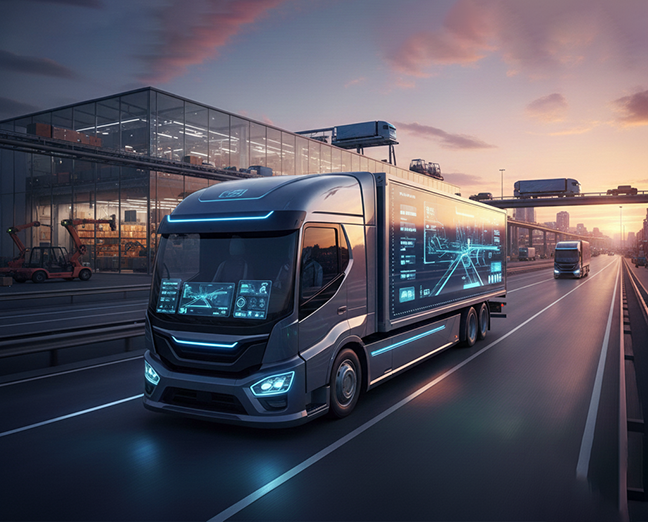
By 2026, logistics technology will be fundamentally reshaped by AI route optimisation and cloud logistics platforms working in tandem to deliver unprecedented efficiency, agility, and transparency across global supply chains. These innovations enable logistics providers to dynamically adjust operations in real time, reduce costs, and respond proactively to market disruptions.
AI route optimisation leverages predictive analytics and real-time data to continuously refine delivery routes based on traffic conditions, weather patterns, and fluctuating demand. Cloud logistics platforms provide the scalable, integrated infrastructure that connects all stakeholders carriers, suppliers, warehouses, and customers through centralised dashboards and real-time visibility, transforming logistics from reactive coordination into proactive, data-driven orchestration.
What Is AI Route Optimisation and How Does It Transform Logistics?
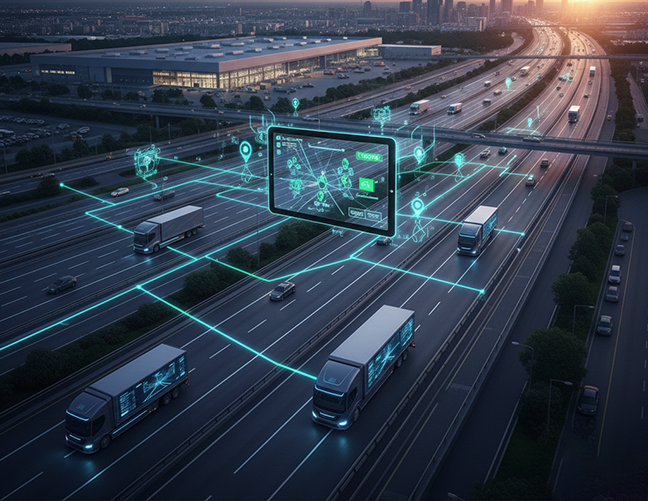
AI route optimisation is an advanced decision-making technology that uses machine learning algorithms and real-time data inputs to automatically determine the most efficient delivery routes for vehicles and shipments. This capability moves beyond static route planning by continuously analysing variables such as traffic congestion, weather disruptions, delivery priorities, vehicle capacity, and customer preferences.
The transformation occurs through automation and intelligence. AI systems eliminate manual route planning, reducing human error and decision latency. They predict potential delays before they happen, reroute drivers dynamically, and balance workloads across fleets to maximise vehicle utilisation. This results in faster deliveries, lower fuel consumption, reduced operational costs, and improved customer satisfaction through accurate delivery windows.
- Real-time route adjustment based on live traffic, weather, and demand signals minimises delays and improves on-time performance.
- Predictive analytics anticipate disruptions such as road closures or weather events, enabling proactive contingency planning.
- Automated decision-making reduces dependency on manual intervention, freeing logistics managers to focus on strategic planning.
- Fuel and emissions reduction through optimised routing supports sustainability goals and regulatory compliance.
- Enhanced inventory management through better delivery predictability improves stock turnover and warehouse efficiency.
By 2026, AI route optimisation will be a foundational capability for logistics providers aiming to meet rising consumer expectations for speed, transparency, and environmental responsibility while maintaining cost discipline and operational resilience.
How Do Cloud Logistics Platforms Enable Supply Chain Integration?
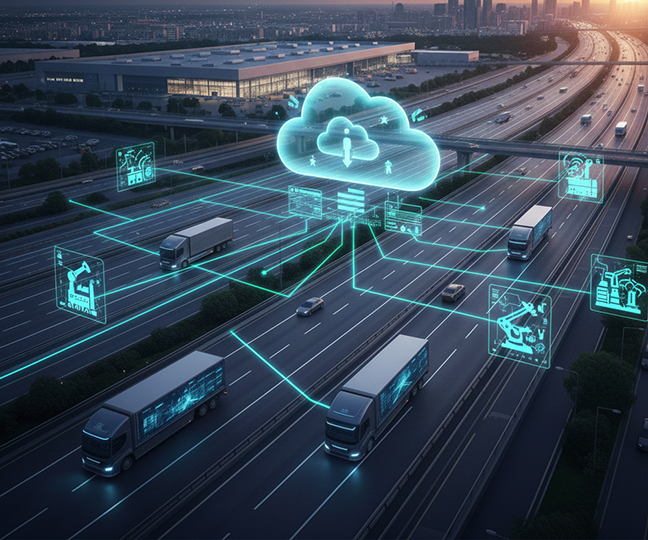
Cloud logistics platforms are centralised, web-based systems that integrate data, workflows, and communication across all participants in the supply chain from manufacturers and warehouses to carriers, retailers, and end customers. These platforms provide a single source of truth accessible in real time from any location, enabling seamless collaboration and visibility.
Integration is achieved through standardised APIs, real-time data synchronisation, and modular architectures that connect Transport Management Systems (TMS), Warehouse Management Systems (WMS), Enterprise Resource Planning (ERP) platforms, and IoT-enabled devices. This interoperability eliminates data silos, reduces manual data entry, and accelerates decision-making across organisational and geographic boundaries.
- Scalability allows logistics operations to expand or contract rapidly based on demand without infrastructure overhauls.
- Real-time visibility across the logistics network enables stakeholders to track shipments, monitor inventory levels, and identify bottlenecks instantly.
- Centralised dashboards provide actionable insights through visualisations, alerts, and performance metrics accessible to all authorised users.
- Logistics-as-a-Service (LaaS) models offer flexible, subscription-based access to advanced logistics capabilities without heavy capital investment.
- Integration with IoT sensors and blockchain technology enhances traceability, security, and compliance throughout the supply chain.
Cloud logistics platforms transform supply chains from fragmented, reactive systems into cohesive, agile networks capable of responding rapidly to market changes, regulatory requirements, and customer expectations. This architectural shift is essential for achieving competitive advantage in 2026 and beyond.
What Are the Key Benefits of Combining AI Route Optimisation with Cloud Logistics Platforms?
The convergence of AI route optimisation and cloud logistics platforms creates a synergistic effect that amplifies the benefits of each technology. AI provides the intelligence to make optimal decisions in real time, while cloud platforms provide the infrastructure to execute those decisions seamlessly across complex, multi-stakeholder networks.
This combination enables logistics providers to achieve operational resilience through continuous adaptation. When disruptions occur whether weather events, traffic incidents, or demand spikes AI algorithms instantly recalculate optimal routes and resource allocations, while cloud platforms propagate these updates across all connected systems and stakeholders without delay. The result is a logistics operation that is both intelligent and responsive.
- Proactive disruption management reduces the impact of unforeseen events through automated contingency planning and real-time rerouting.
- Enhanced customer satisfaction results from accurate delivery predictions, transparent tracking, and faster fulfilment times.
- Cost reduction through optimised vehicle utilisation, reduced fuel consumption, and minimised idle time improves profitability.
- Sustainability gains from lower emissions and more efficient resource use support corporate social responsibility and regulatory compliance.
- Competitive differentiation through superior service levels, operational agility, and innovation leadership attracts and retains customers.
Organisations that integrate these technologies position themselves to meet the dual demands of 2026: operational excellence and strategic agility. The ability to adapt quickly while maintaining cost control and service quality defines market leadership in modern logistics.
Key Takeaways: Preparing for Logistics Technology in 2026
- AI route optimisation dynamically adjusts delivery routes in real time, reducing costs, improving delivery speed, and supporting sustainability through lower fuel consumption and emissions.
- Cloud logistics platforms integrate all supply chain participants through centralised data, real-time visibility, and scalable infrastructure, transforming fragmented operations into cohesive, agile networks.
- The combination of AI and cloud technologies enables proactive disruption management, enhanced customer satisfaction, and competitive differentiation through superior service delivery and operational resilience.
- Logistics-as-a-Service models and modular architectures lower barriers to adoption, allowing organisations of all sizes to access advanced logistics capabilities without heavy capital investment.
- Success in 2026 requires logistics providers to prioritise integration, data quality, and continuous innovation to meet evolving consumer expectations and regulatory requirements.
| Aspect | ATT Group Solutions | Traditional Logistics Systems |
| Real-Time Integration | ✔️ Cloud-based platforms with API connectivity and IoT integration | ✘ Limited interoperability |
| Scalability | ✔️ Modular, scalable architecture adaptable to changing demand | Partial requires infrastructure upgrades |
| AI-Powered Automation | ✔️ AI-driven decision-making for route optimisation and resource allocation | ✘ Manual planning processes |
| Operational Visibility | ✔️ Centralised dashboards with real-time tracking and analytics | Partial fragmented data sources |
| 24/7 Technical Support | ✔️ Round-the-clock support with ISO-certified quality assurance | ✘ Limited support hours |
| Regulatory Compliance | ✔️ Built-in compliance frameworks aligned to ISO 27001 and regional standards | Partial requires manual oversight |
How ATT Group Supports Logistics Transformation
ATT Group delivers customised, end-to-end technology solutions designed to enable logistics providers and supply chain organisations to adopt AI route optimisation and cloud logistics platforms with confidence and precision. With deep expertise in enterprise IT systems, digital services, and system integration, ATT designs modular, scalable platforms that integrate seamlessly with existing infrastructure while supporting future innovation.
ATT’s solutions are underpinned by multiple ISO certifications including ISO 9001, ISO 14001, ISO 45001, and ISO/IEC 27001 ensuring quality, security, environmental responsibility, and operational excellence. The company’s 24/7 technical support and consultative approach provide long-term partnership, not transactional service, enabling clients to navigate complex digital transformations with clarity and assurance.
By fusing AI-powered platforms, cloud infrastructure, and IoT-enabled smart systems, ATT empowers logistics organisations across Southeast Asia and beyond to achieve operational agility, cost efficiency, and competitive advantage in 2026 and beyond. The result is logistics operations that are intelligent, resilient, and ready for the future.
Partner with ATT Group to transform your logistics operations with AI-powered, cloud-enabled solutions designed for the demands of 2026. Contact our team today to discuss your customised logistics technology roadmap.
Contact ATT at infosoft-sales@attsystemsgroup.com for details.
Frequently Asked Questions
Q: How does AI route optimisation reduce fuel costs and improve delivery times compared to traditional route planning?
A: AI route optimisation continuously analyzes real-time traffic, weather, and demand data to automatically adjust routes, eliminating inefficiencies caused by static planning and reducing both fuel consumption and delivery delays. This automation cuts decision latency and maximizes vehicle utilization, resulting in measurable cost savings and faster fulfilment.
Q: What’s the difference between cloud logistics platforms and traditional Transport Management Systems?
A: Cloud logistics platforms provide centralized, real-time integration across all supply chain stakeholders through scalable web-based infrastructure, while traditional TMS often operate in silos with limited interoperability. Cloud platforms enable instant visibility, automated data synchronization, and flexible scalability without requiring infrastructure overhauls.
Q: Can small to mid-sized logistics companies afford AI and cloud logistics technology in 2026?
A: Yes, Logistics-as-a-Service (LaaS) models offer subscription-based access to advanced AI and cloud capabilities without heavy capital investment, making these technologies accessible to organizations of all sizes. Modular architectures allow companies to scale features based on current needs and budget.
Q: How do AI route optimisation and cloud platforms work together to handle unexpected supply chain disruptions?
A: AI algorithms instantly recalculate optimal routes and resource allocations when disruptions occur, while cloud platforms immediately propagate these updates across all connected systems and stakeholders. This combination enables proactive contingency planning and real-time coordination that minimizes impact on delivery schedules.
Q: What ISO certifications should I look for when choosing a logistics technology partner like ATT Group?
A: Look for ISO 9001 for quality management, ISO/IEC 27001 for information security, ISO 14001 for environmental responsibility, and ISO 45001 for occupational health and safety. ATT Group holds all these certifications, ensuring comprehensive compliance, security, and operational excellence in logistics technology implementation.
Q: How does real-time visibility in cloud logistics platforms improve customer satisfaction?
A: Real-time visibility enables accurate delivery predictions, transparent shipment tracking, and faster issue resolution, directly addressing customer expectations for speed and transparency. Centralized dashboards provide instant access to shipment status, reducing inquiries and building trust through proactive communication.
Send us a message
Contact Information
Address:
35 Ubi Crescent, ATT Building, Singapore, 408585
Phone:
Email:
Website:
www.attsystemsgroup.com